
Project Overview
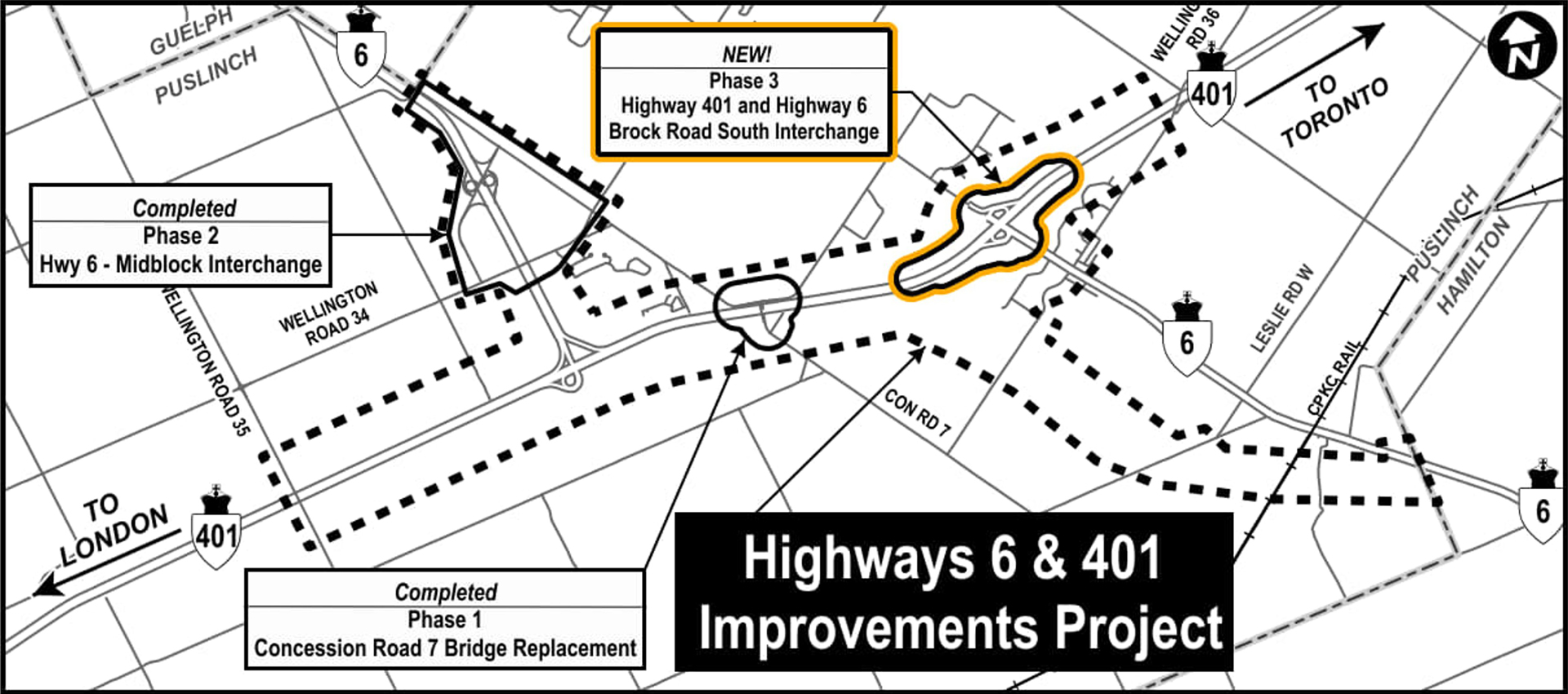
The Ontario Ministry of Transportation (MTO) is moving forward with Phase 3 of Highways 6 and 401 Improvements. Phase 3 includes the Environmental Assessment, Design and Construction of the Highway 401 and Highway 6/Brock Road South Interchange Improvements.
The Highway 401 & Highway 6/Brock Road South Interchange Improvements (The Project) will build on the findings of GWP 8-00-00, which identified a recommended configuration of the interchange.
The Project limits are within the Township of Puslinch, Wellington County.
Study Objectives
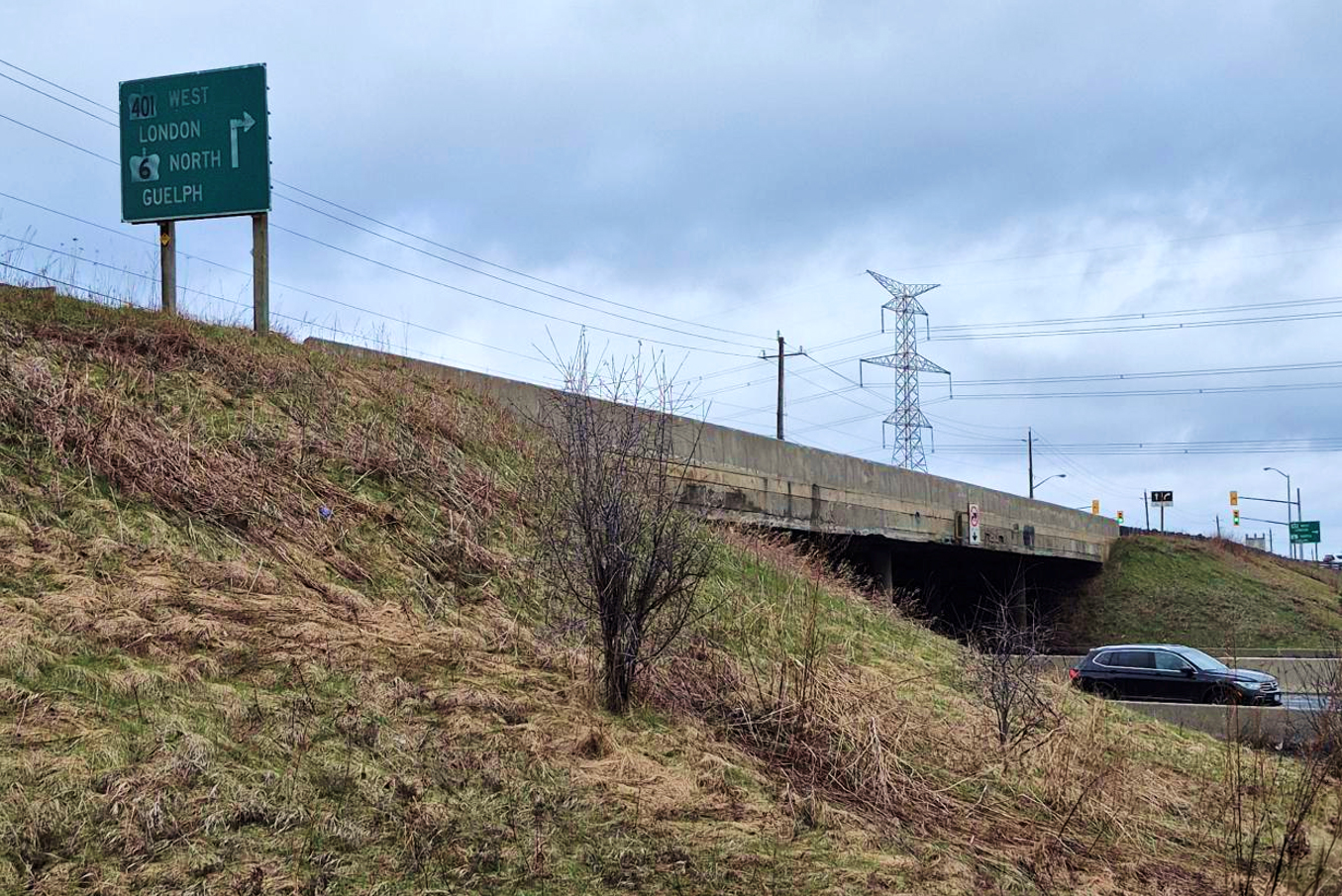
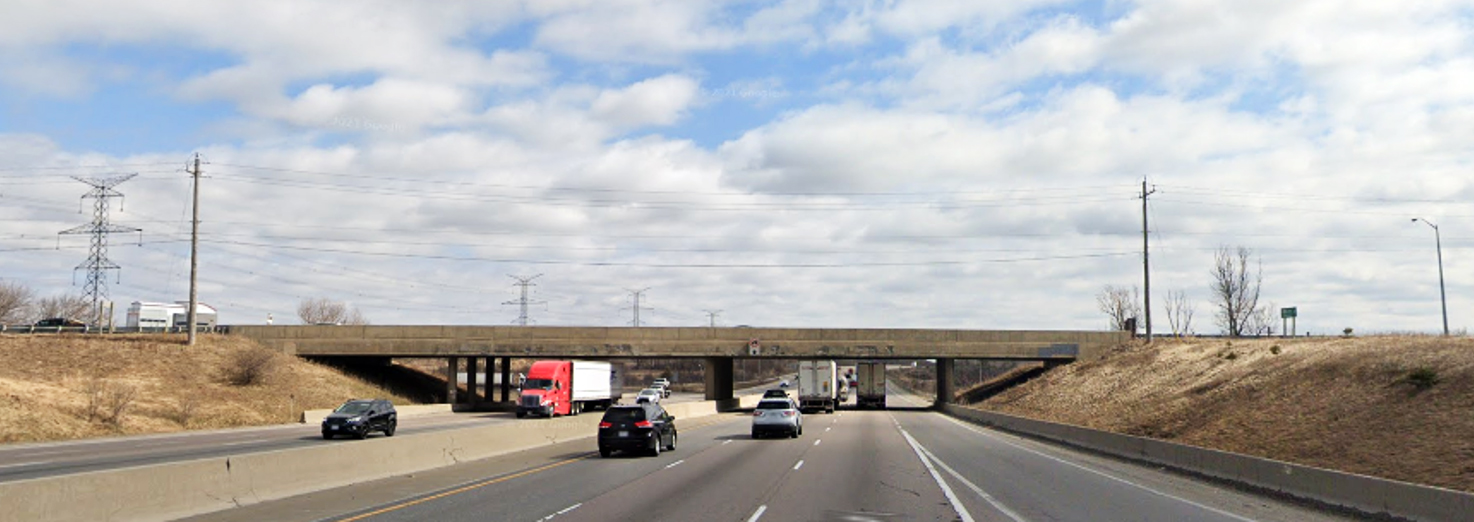
The Brock Road Underpass is approaching the end of its service life and requires replacement.
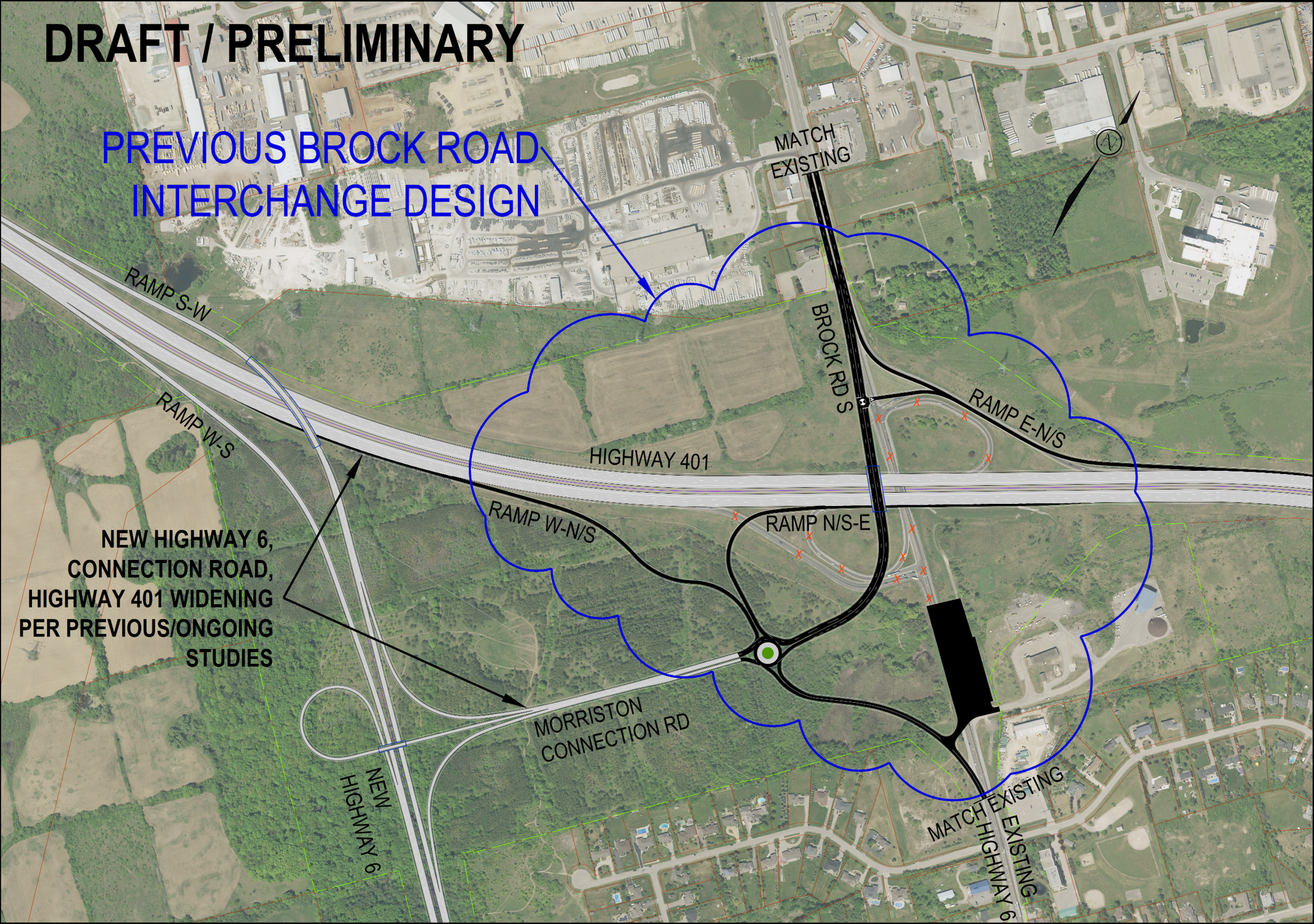
The Project will address the required bridge replacement and develop new alternatives (building on the previous Brock Road Interchange design) to examine improvements to the Highway 401 and Highway 6/Brock Road South Interchange that will:
- Tie into the existing Highway 6 / Brock Road alignment.
- Be compatible with the future Highway 6 realignment and other related improvements.
- Improve geometrics and traffic operations, where possible, while minimizing impacts to environmentally sensitive features.
Study Process
The Project is following the approved planning process for a Group ‘B’ project in accordance with the Class Environmental Assessment for Provincial Transportation Facilities and Municipal Expressways (2024).
The preferred alternative and the associated impacts and mitigation will be included in a Transportation Environmental Study Report.
Preliminary Design and Class EA Study G.W.P. 3041-23-00
Notice of Study Commencement
Data Collection and Field Investigation
Identify Alternative Designs
Evaluate and Select Preferred Alternative Design for the Project
Public Information Centre
We are here
Confirm the Recommended Plan Including Avoidance and Mitigation Measures
Transportation Environmental Study Report
(Available for Public Comment Period)
Class Environmental Assessment Process Complete
(Project is approved and can proceed to detail design and construction)
The Project Team will engage and consult with Indigenous Communities and Stakeholders throughout the Environmental Assessment Study
Data Collection and Field Investigations
The Environmental studies being completed for the Environmental Assessment and to inform design include, but are not limited to:
- Terrestrial Ecosystems
- Species at Risk
- Fish and Fish Habitat
- Groundwater
- Land Use
- Air Quality
- Traffic Noise
- Built Heritage and Cultural Heritage Landscapes
- Archaeology
- Surface Water
- Soil Management
The environmental fieldwork and existing conditions reporting for this area was recently completed as part of the overall Highways 6 and 401 Improvements Project. As such, this reporting will be utilized for the advance contract where applicable.
Brock Road Interchange Improvements Overview
Phase 3 improvements will include consideration of:
- Replacement of the Brock Road underpass structure on a new alignment
- Reconfiguration of the Highway 401 interchange at Brock Road
- Provide compatibility with future plans (Highway 401 widening, new Alignment of Highway 6, and associated interchanges)
- Provide geometric and operational improvements (e.g. additional/improved ramps and traffic control)
- Improvements to the Brock Road carpool lot
- Drainage and stormwater management
- Illumination
- Active transportation needs
- Landscaping
- Utility relocations
- Signage
Development of Alternatives
- Two new alternative designs that meet the project objectives were identified.
- Both alternatives include:
- Parclo A4 interchange;
- Signalized intersection at the north ramp terminal;
- Roundabout at south ramp terminal;
- Brock Road structure replaced west of existing;
- Carpool lot improved and relocated to northwest quadrant.
- Primary differences are focused in the northwest quadrant of the interchange.
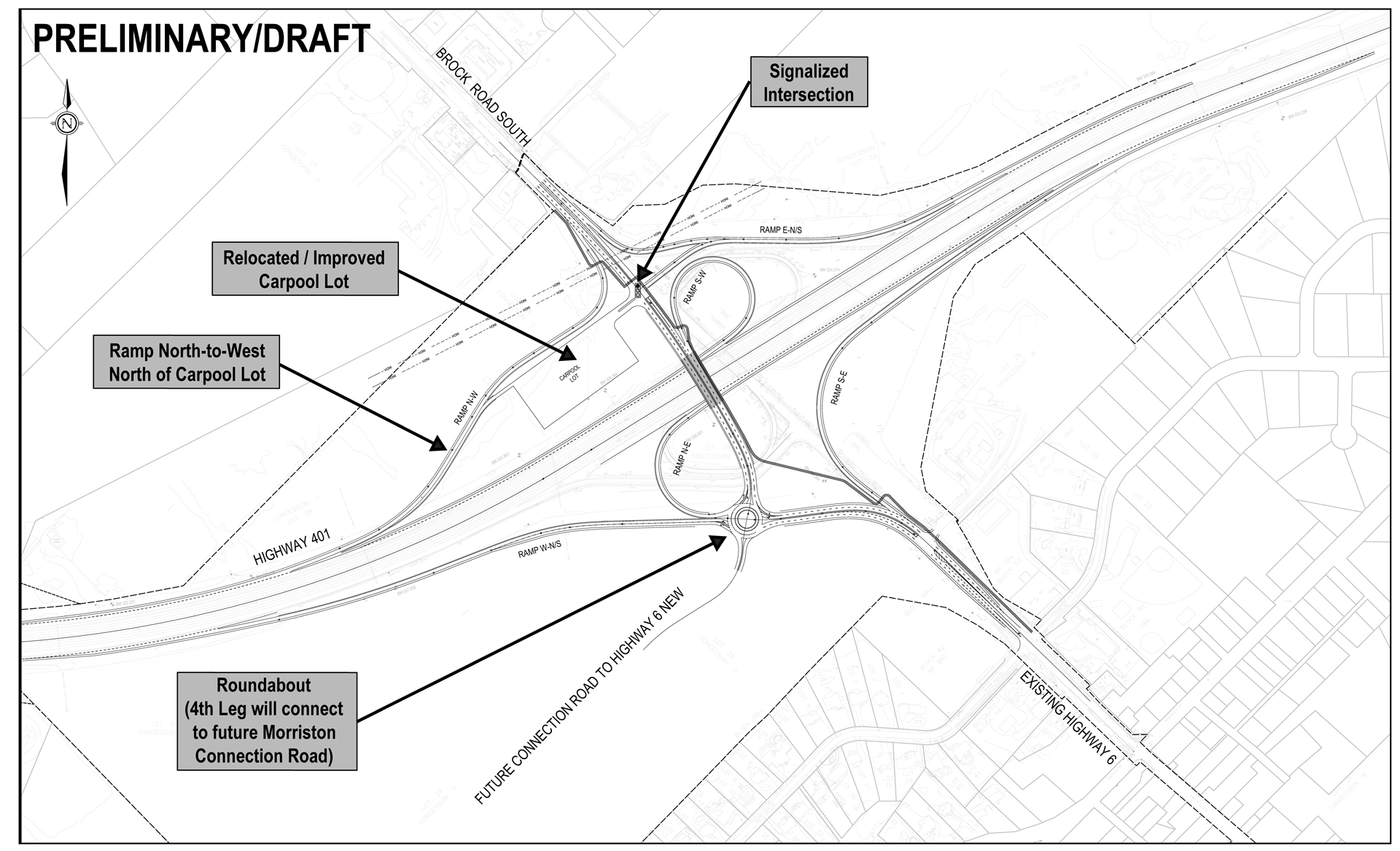
- Ramp north-to-west located before north ramp terminal intersection
- Ramp north-to-west has more desirable geometry, relative to Alternative 2, with improved visibility
- Improved traffic operations with Ramp north-to-west traffic removed prior to the intersection
- Larger footprint in northwest quadrant
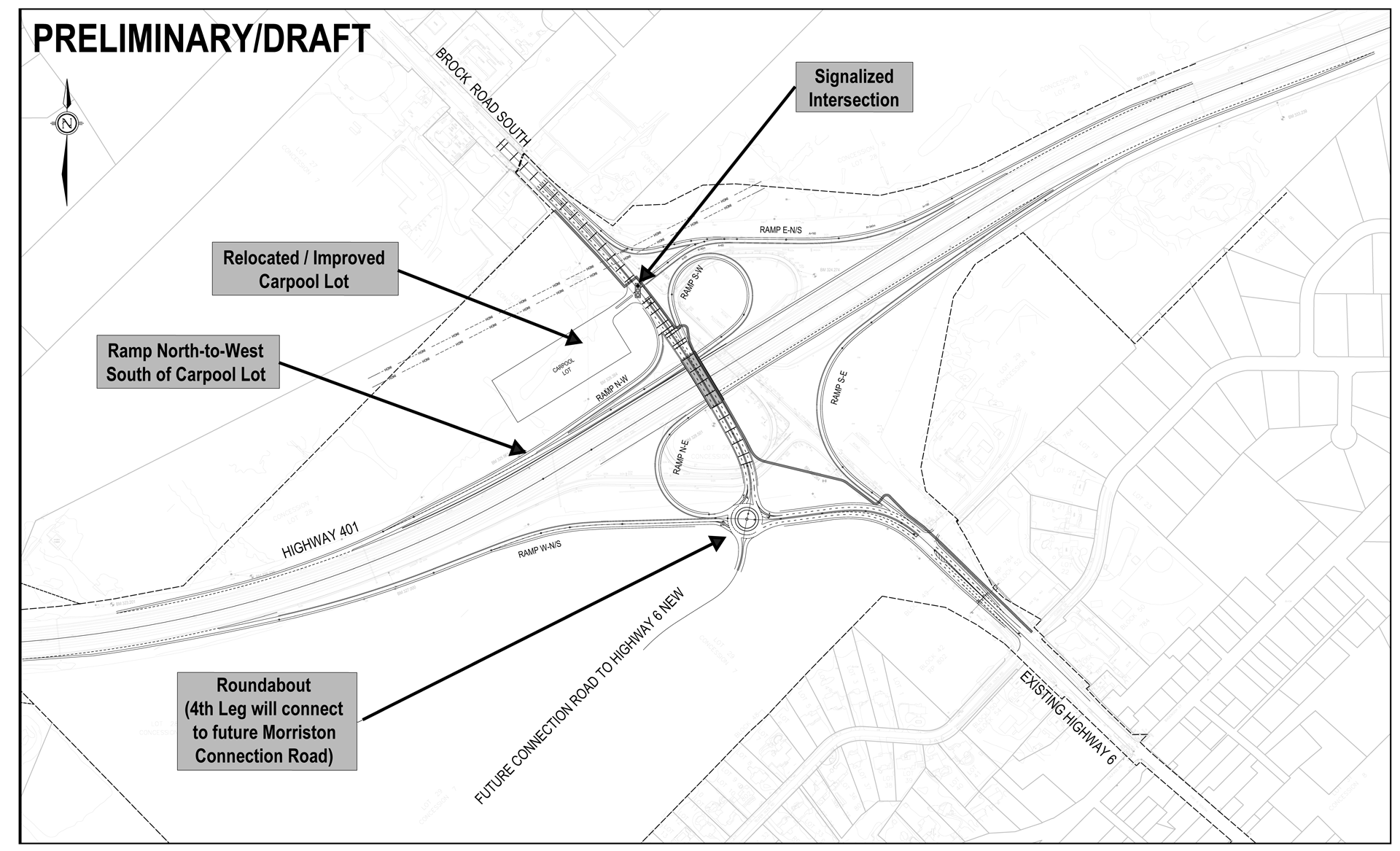
- Ramp north-to-west located after north ramp terminal intersection
- Ramp north-to-west has less desirable geometry alignments and sight distance
- Less desirable traffic operations with Ramp north-to-west traffic going through the intersection
- Retaining wall required along south edge of Ramp north-to-west
Evaluation of Alternatives
The alternatives have been evaluated to compare the advantages and disadvantages of each and to select the Preferred Alternative Design.
The Preferred Alternatives Design will be the design alternative that maximizes the transportation benefit while minimizing the overall negative net environmental impacts.
Evaluation Criteria
The Project Team used the evaluation criteria shown here to assess the design alternatives for the Highway 401 and Brock Road/Highway 6 interchange.
| Evaluation Category | Evaluation Criteria |
|---|---|
| Transportation and Cost Considerations |
|
| Natural Environments |
Impacts To:
|
| Socio-Economic Environments |
Impacts To:
|
| Cultural Environments |
Impacts to:
|
Summary of the Alternatives Evaluation
| Legend | ||||
|---|---|---|---|---|
| Most Preferred | ⟶ | Least Preferred | ||
| ● | ◕ | ◑ | ◔ | ○ |
| Evaluation Category | Alt 1 | Alt 2 | Summary |
|---|---|---|---|
| Transportation and Cost Considerations | ◕ | ◑ |
|
| Natural Environments | ◕ | ◕ |
|
| Socio-Economic Environments | ◕ | ◕ |
|
| Cultural Environments | ● | ● |
|
| Overall Score and Summary | ◕ | ◑ |
Alternative 1 is therefore preferred overall. |
Preferred Alternative Design
Alternative 1 is the Preferred Alternative Design and includes:
The proposed improvements:
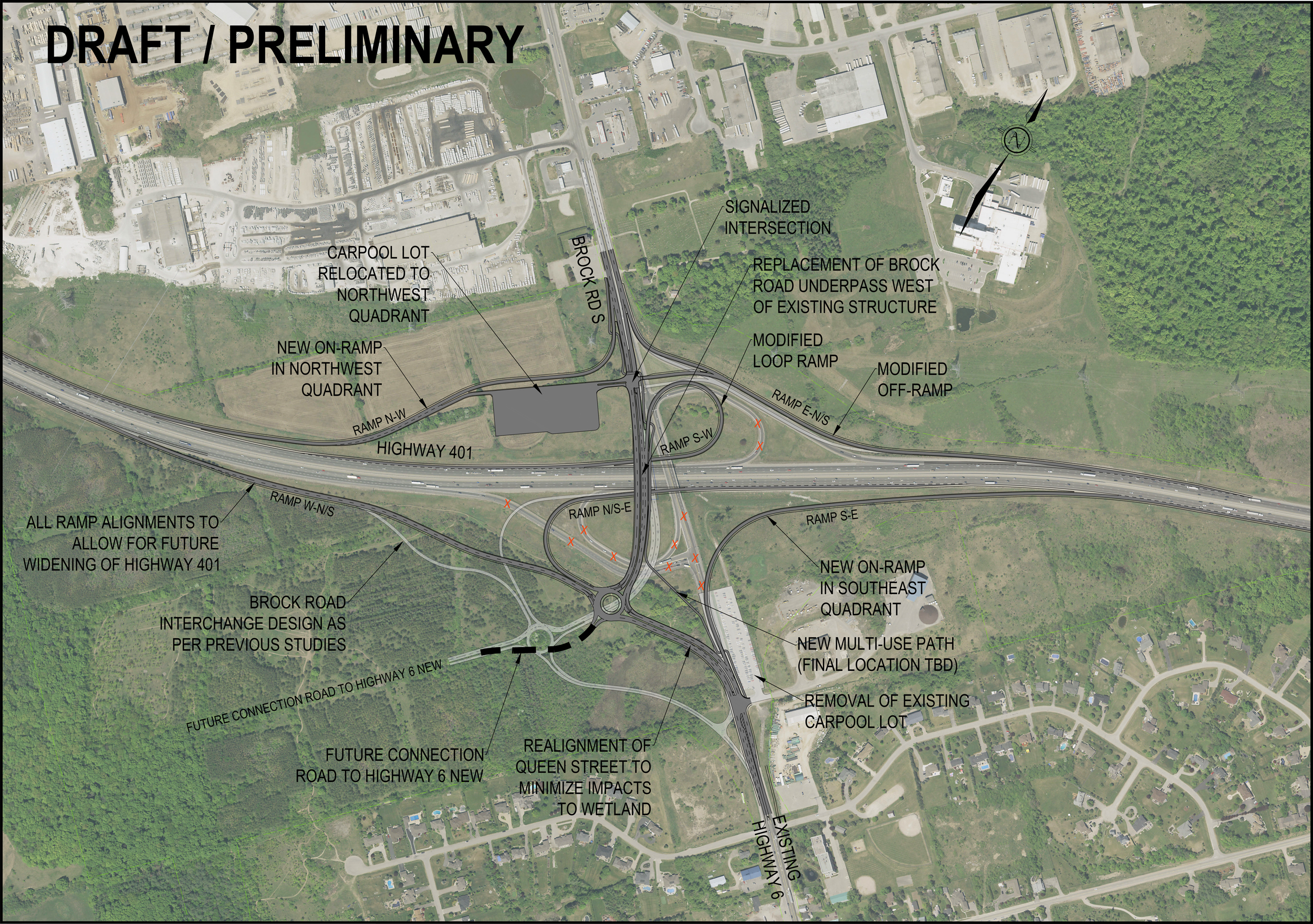
Environmental Studies
The following environmental studies have been conducted or are currently in progress:
- Terrestrial Ecosystems Existing Conditions and Impact Assessment;
- Fish and Fish Habitat Screening;
- Land Use Factors Assessment;
- Air Quality Assessment;
- Noise Impact Assessment;
- Cultural Heritage Assessment: Built Heritage Resources and Cultural Heritage Landscapes;
- Archaeological Assessment; and
- Groundwater Studies
Impacts and mitigation will be confirmed in the next stage of the Project and documented in the Transportation Environmental Study Report, which will be available for public comment later this year
Terrestrial Ecosystem and Species at Risk
Field surveys and background research was undertaken to identify the terrestrial ecosystem features and Species at Risk habitat within the Study Area.
Key Findings
- The Study Area is largely consisted of agricultural lands intercepted with remnant woodlands and wetlands.
- Small portions of The Mill Creek Puslinch Wetland Complex, a Provincially Significant Wetland (PSW) are in the eastern extent of the Study Area.
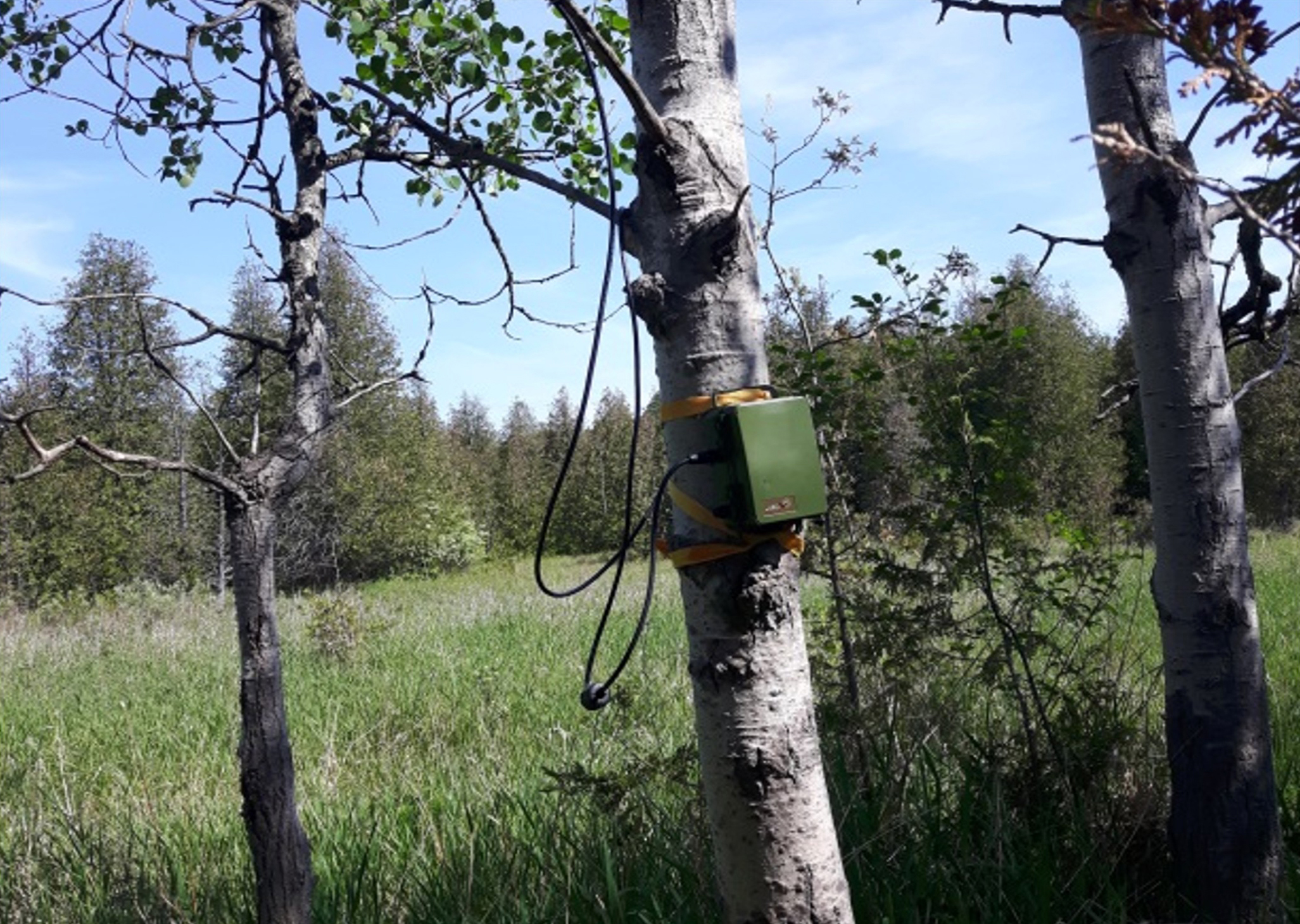
- Habitat for Species at Risk (SAR) bats was confirmed in the Study Area through acoustic monitoring and cavity tree searches.
- Bobolink and Eastern Meadowlark, two bird species protected under the Migratory Birds Convention Act, 1994 (MBCA) that receive residence protection under the Species at Risk Act, 2002 (SARA) were observed in previous field investigations (2018) and may be present;
- Field surveys in 2022 identified that no Schedule 1 migratory bird nests (e.g., Pileated Woodpecker, Green Heron) protected under the Migratory Birds Regulation, were present in the project area. Other bird species with general nest protection under the MBCA were recorded, but no nests were observed during field investigations.
- Field investigations are ongoing to confirm presence absence of Species at Risk and MBCA protected birds.
- Areas of Confirmed and Candidate ‘Significant Wildlife Habitat’ were identified.
| Potential Impacts to Terrestrial Ecosystems and Species at Risk | Preliminary Proposed Mitigation Measures |
|---|---|
|
|
2026 Terrestrial field investigations to confirm existing field data, originally collected 2017-2022, is ongoing.
Fish and Fish Habitat
A Fish and Fish Habitat Assessment was completed as part of the Highways 6 and 401 Improvements Project.
Key Findings
- The features within the project area include intermittent or ephemeral drainage swales, roadside and highway culverts, and isolated ponds and wetlands.
- Field assessments confirmed that none of these features contain fish or have a hydrologic connection to fish‑bearing watercourses and do not provide the environmental conditions required to support fish life processes.
- The Phase 3 Project is not expected to impact fish or fish habitat.
Groundwater
Hydrogeological studies and groundwater assessment have been undertaken to establish existing geological and groundwater conditions within the Study Area.
Key Findings
- Two (2) aquifers have been identified within the Study Area, including: 1) within the Overburden soil; and, 2) within the underlying Bedrock.
- Potable water within the Study Area is dependent on private wells. No municipal supply wells are located within the Study Area.
- A limited portion of the Project is located within a Provincially Significant Wetland (PSW) which could present a shallow groundwater condition.
- Groundwater within the Study Area is considered to have a low to medium vulnerability for contamination from the ground surface.
| Potential Impacts to Groundwater | Preliminary Proposed Mitigation Measures |
|---|---|
|
|
Land Use
A review of Land Use was completed as part of the Highways 6 and 401 Improvements Project (GWP 3042-14-00).
Key Findings
- The Project is compatible with surrounding land uses and consistent with provincial and municipal planning policies. It supports the planned community growth, while maintaining local municipal services.
- The Phase 3 Project is not expected to impact existing land use outside of the existing MTO property.
- Mitigation to address the potential, temporary disruptions to surrounding lands during construction will be considered as construction staging progresses and will be summarized in the Transportation Environmental Summary Report.
Air Quality
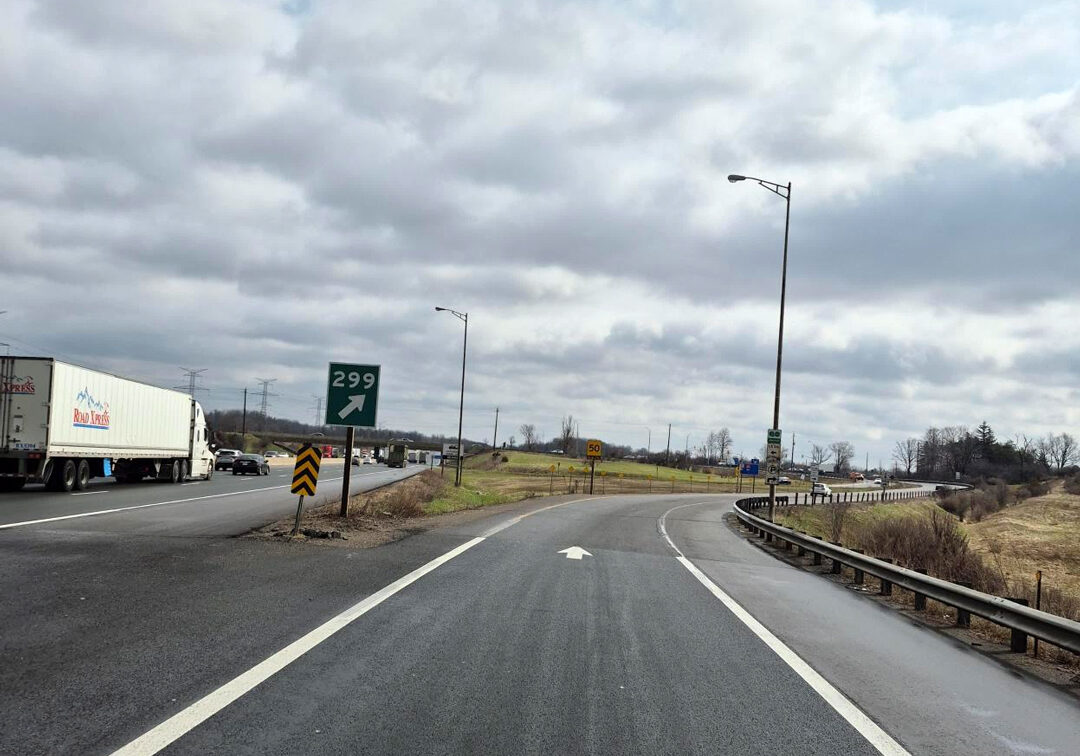
An Air Quality Impact Assessment has been undertaken in accordance with the MTO Environmental Guide for Assessing and Mitigating the Air Quality Impacts and Greenhouse Gas Emissions of Provincial Transportation Projects, 2020.
The assessment evaluated three scenarios of the Preferred Alternative Design to gain understanding of the incremental impacts resulting from the proposed project:
- The current air quality of existing conditions
- The future air quality conditions with no improvements in place; and
- The future air quality conditions with the proposed improvements in place.
Key Findings
- There are existing exceedances of some contaminants found in the existing ambient air quality within the air quality study area.
- With the implementation of the Project, the majority of the criteria air contaminants are still expected to be below the respective provincial and federal air quality criteria at the receptors in the air quality study area except for in the northeast quadrant of the interchange.
- Exceedances in the northeast quadrant are expected to be due to both anticipated project contribution and to high levels of existing ambient air quality concentrations of Nitrogen Dioxide, fine particulate matter and benzo(a)pyrene within the Study Area.
| Potential Impacts to Air Quality | Preliminary Proposed Mitigation Measures |
|---|---|
The following impacts are anticipated in the northeast quadrant of the interchange as a result of the proposed highway improvements:
|
Avoid impacts to the existing vegetation between the Ministry Right of Way and the residence in the northeast quadrant of the interchange which provides mitigation of the potential impacts associated with the expected increase in fine particulate matter. |
Air Quality impacts will continue to be assessed related to construction staging and shared in the Transportation Environmental Study Report
Noise
A Noise Assessment has been undertaken in accordance with the MTO Environmental Noise Guide, 2022.
The Noise Assessment
- The assessment investigates the potential noise impacts of future infrastructure on adjacent Noise Sensitive Areas (NSAs) (i.e., residential buildings).
- NSAs are represented by the worst-case receivers in the front row of a development.
- The Noise Impact Assessment was completed for those receptors within 600m from the closest edge of pavement.
- The Noise Assessment compares the predicted difference in noise, at receptors for two future scenarios including:
- Future (2041) traffic conditions with no improvements in place; and
- Future (2041) traffic conditions with proposed highway improvements in place
Key Findings:
- The proposed improvements will result in noise levels below Provincial Guidelines for change and absolute noise levels.
- As such, noise mitigation is not proposed.

Noise impacts will continue to be assessed related to construction staging and shared in the Transportation Environmental Study Report
Cultural Heritage
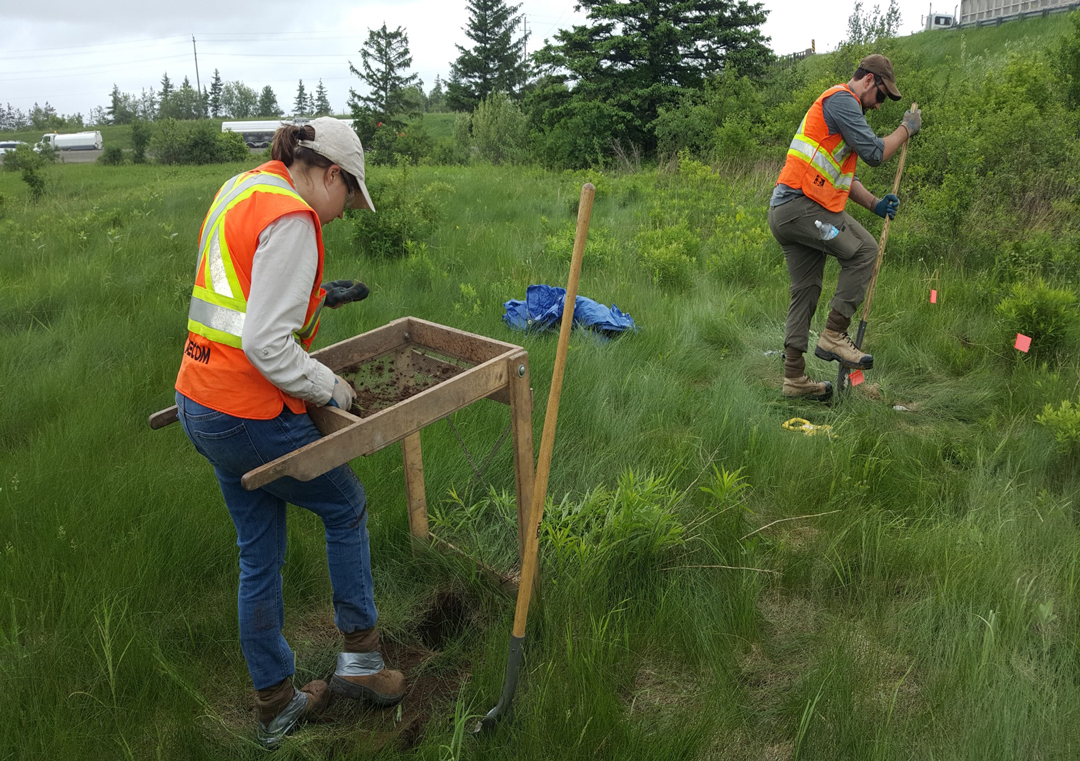
An Archaeological Assessment, to meet the requirements of the Ontario Ministry of Citizenship and Multiculturalism’s (MCM’s) Standards and Guidelines for Consultant Archaeologists (Ontario Government 2011) was completed for the Study Area as part of the Highways 6 and 401 Improvements Project (GWP 3042-14-00).
Key Findings
The results of the assessments identified 1 Archaeological Site within the Phase 3 Project Study Area.
The Archaeological Assessment Report was reviewed by the MCM and MCM has confirmed that:
- The identified site has been completely removed by excavation and no longer exists in the ground; and
- All archaeological concerns related to the site have been addressed and no further archaeological work is required.
A Cultural Heritage Assessment was completed for the Study Area as part of the Highways 6 and 401 Improvements Project (GWP 3042-14-00).
Key Findings
Within the Phase 3 Project Study Area:
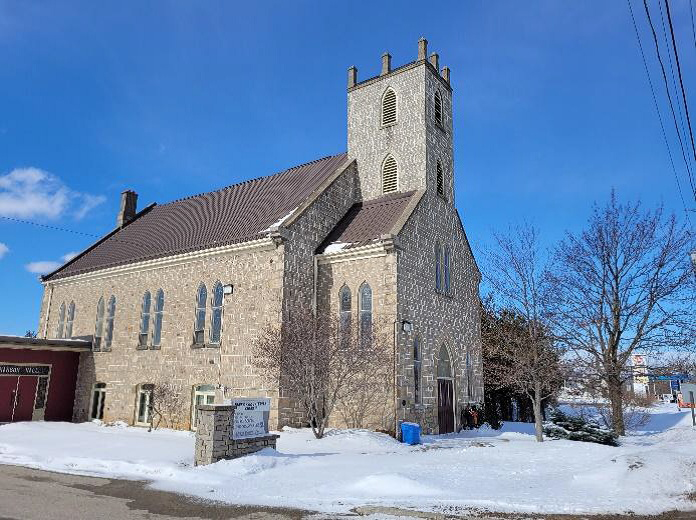
- 1 Designated heritage building, 1 listed Cultural Heritage Landscape and 1 potential Cultural Heritage Landscape were identified.
- No direct impacts to Built Heritage Resources or Cultural Heritage Landscapes are anticipated as a result of the Project.
| Potential Impacts to Cultural Heritage | Preliminary Proposed Mitigation Measures |
|---|---|
|
|
Soil Management
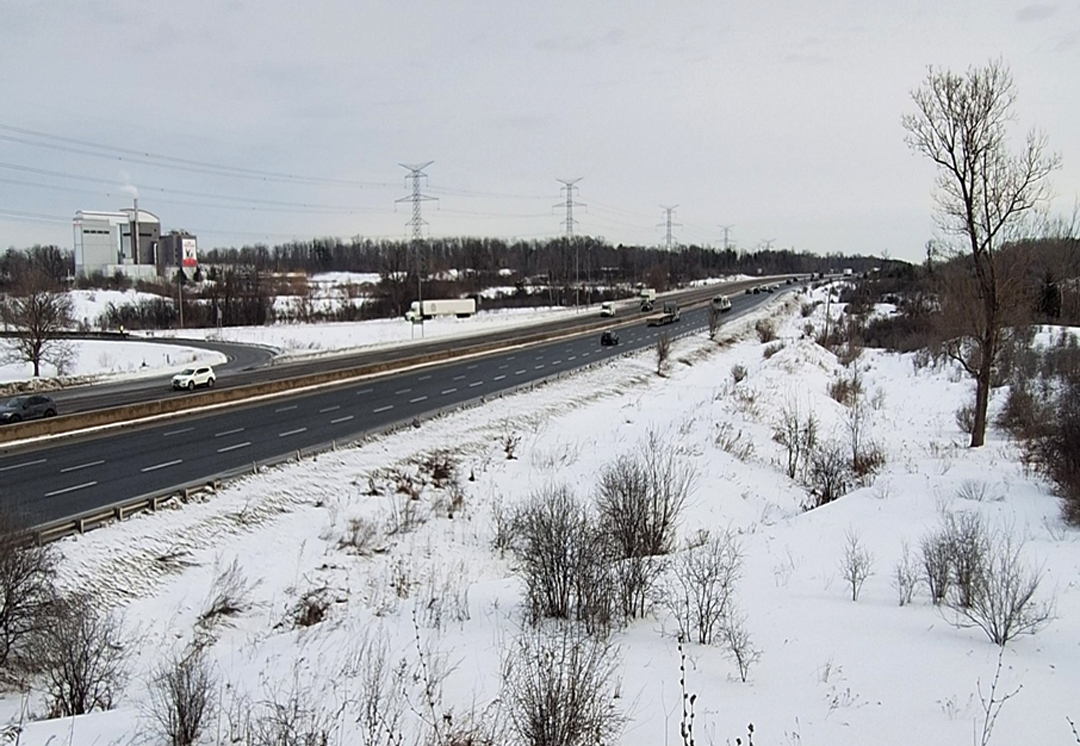
A review of historic and current land uses and significant historic spills within the Project Study Area was completed to identify areas of potential contamination. Properties with commercial, industrial and manufacturing or institutional land uses or properties suspected of using chemical compounds or using imported fill materials of unknown quality have the potential to have contaminated soil and/or groundwater.
To ensure that soil is managed appropriately during construction the following commitments are made for Detail Design stage of the Project:
- A soil sampling program will be completed to characterize the soil in accordance with Ontario Regulation 406/19 (On-Site and Excess Soil Management).
- Completion of a Soil Management Plan to outline soil and fill management requirements for the Contractor.
Surface Water and Drainage
The Project is within the Bronte Creek watershed, which drains southwest to the Niagara Escarpment before draining to Lake Ontario.
Although the proposed improvements will impact the existing drainage pattern, the Preferred Alternative Design can provide sufficient drainage infrastructure to meet current Ministry of Transportation standards and provincial guidelines for stormwater management and environmental protection.
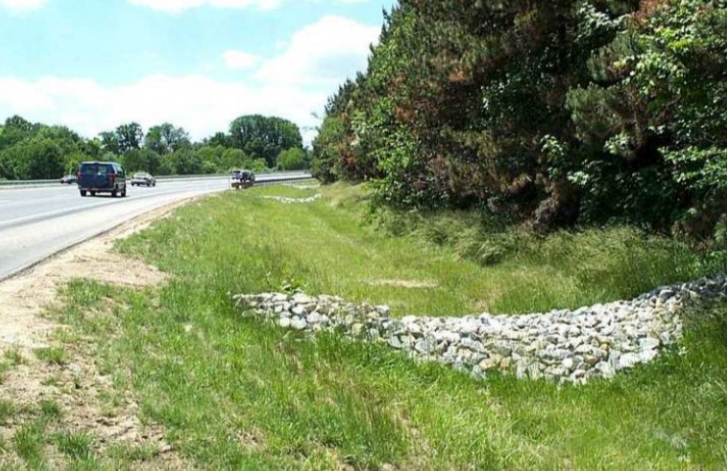
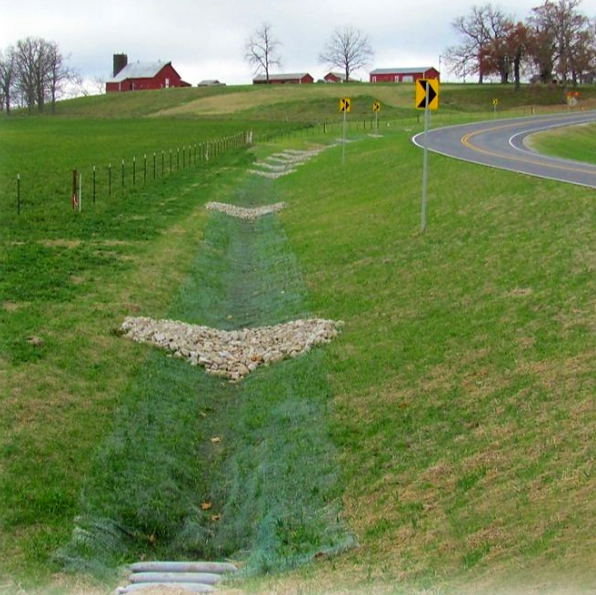
The Project Team will continue to design new drainage elements, such as culverts, storm sewers, and roadside ditches, to safely manage runoff and explore opportunities to include stormwater management features, such as stormwater ponds or grassed swales, to help manage water quality and quantity.
Drainage design will be documented in the Transportation Environmental Study Report.
As part of this project, the existing drainage system will be reviewed and updated to support the proposed Highway 401 and Brock Road South interchange improvements.
The drainage study will include:
- The design of new drainage features, such as culverts, storm sewers, and roadside ditches.
- A review of opportunities to include stormwater management features, such as stormwater ponds or grassed swales, to help manage water quality and quantity.
- Erosion and sediment control measures to protect nearby lands and waterways during construction.
Drainage design details will continue to be developed as the project advances.
Additional Design Features
Active Transportation
- A multi-use path (or provisions) is proposed through the interchange to facilitate connection between Morriston and Aberfoyle
- The Brock Road Underpass bridge will accommodate the multi-use path
- Further design of the multi-use path will be considered in consultation with Wellington County and the Township of Puslinch
Carpool Lot
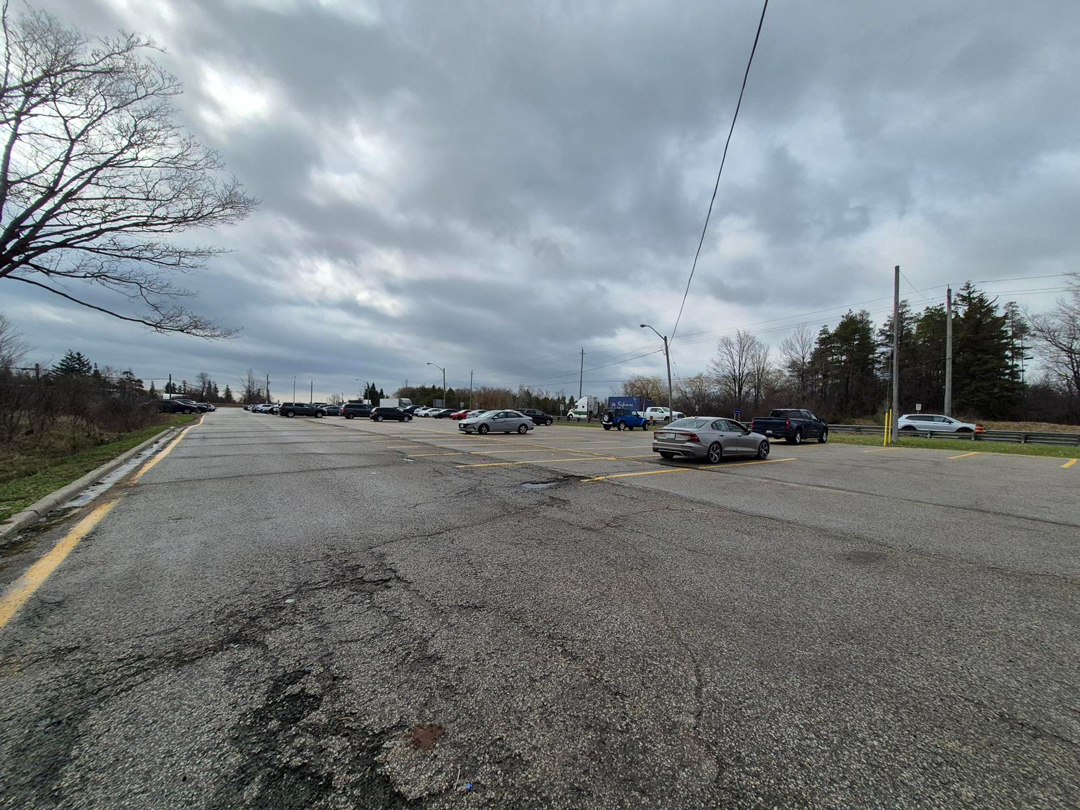
- Relocated to northwest quadrant
- Potential provisions for electric vehicle
charging stations - Up to approx. 275 parking spaces (Existing: 200 spaces)
- Space for potential future expansion
Illumination
The Project will include new illumination as follows:
- Partial illumination of the interchange (illumination at ramp decision points)
- Illumination of the signalized intersection at the north ramp terminal
- Illumination of the roundabout and its approaches at the south ramp terminal
- Full illumination of the new carpool lot
House-side shielding on light poles will be considered to minimize light trespass.
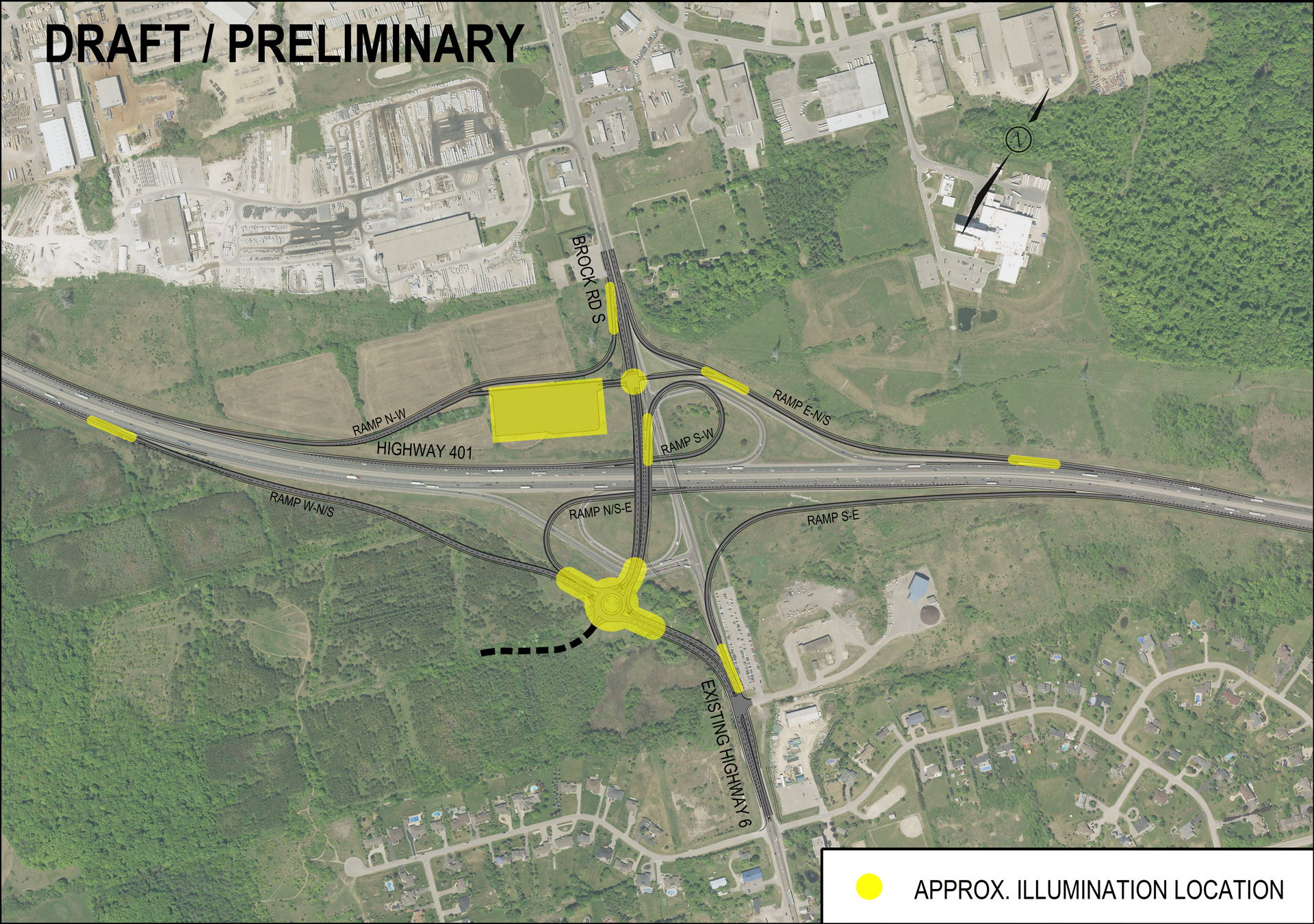
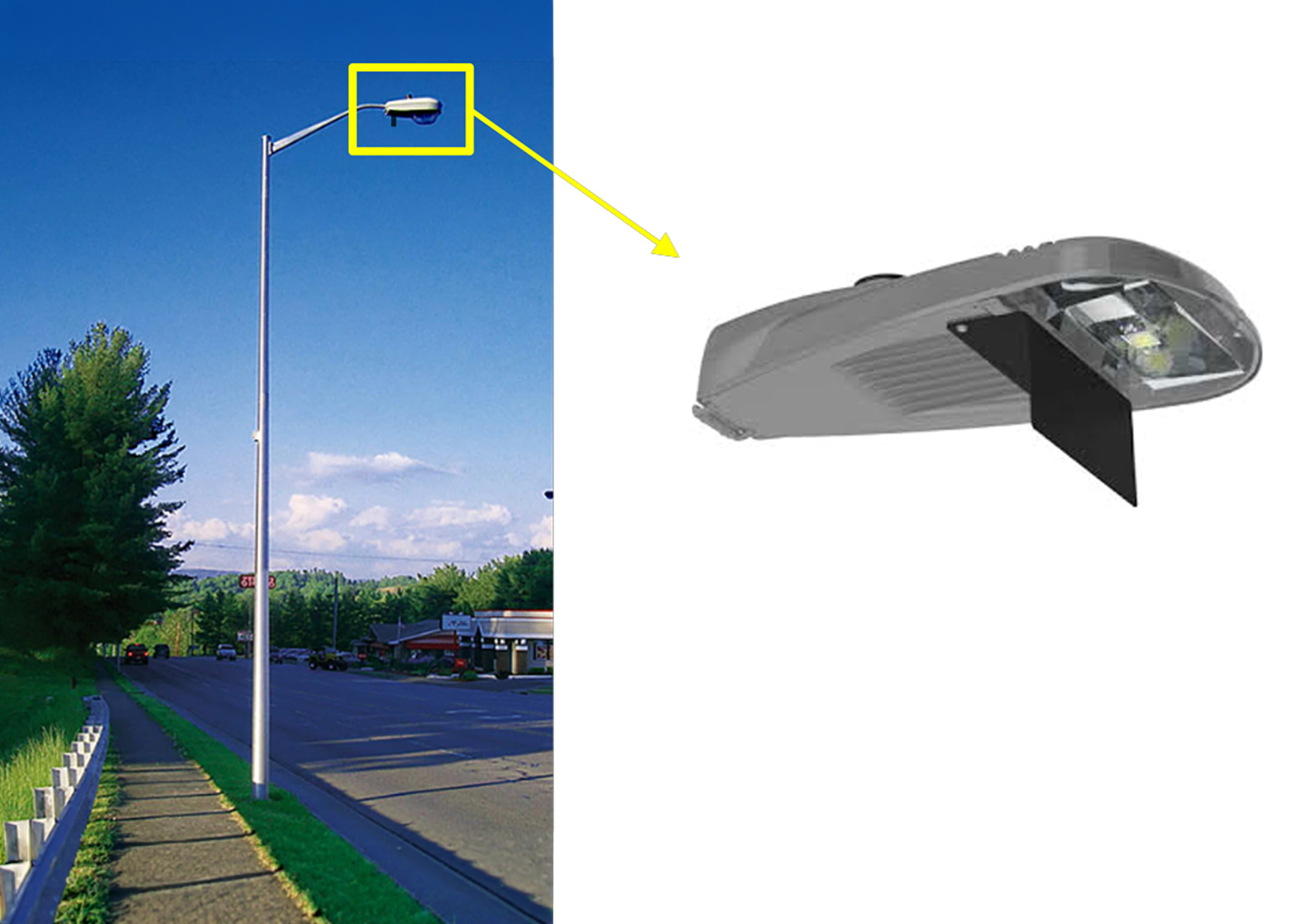
As part of future phases of the Highways 6 and 401 Improvements Project, continuous illumination of Highway 401 and full illumination of the Brock Road interchange is anticipated and may include high mast lighting
Utilities
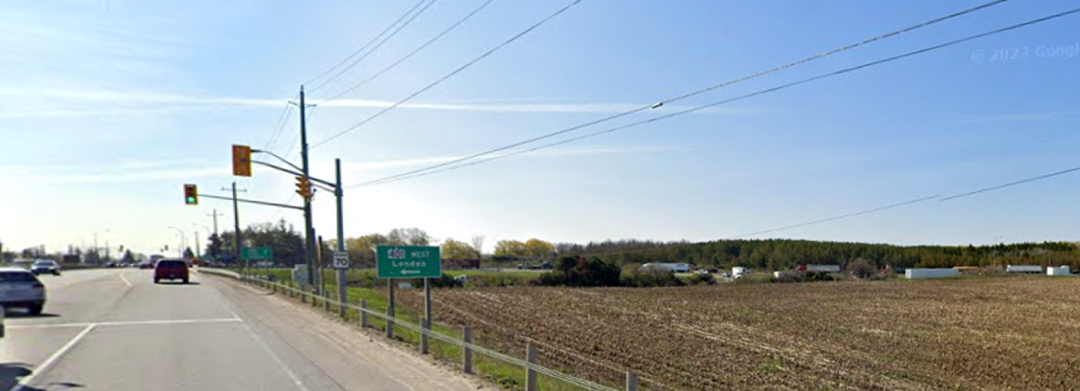
The following utilities have been initially identified within the study area:
- Hydro One Transmission Towers
- Hydro One Distribution lines
- Bell Telecommunications
- Rogers Fiber Optic Cable
- Enbridge Gas
Construction Staging
- Details of the construction staging will be determined as the design advances following this PIC (Detail Design) and will be finalized by the Contractor.
- It is anticipated that Highway 401/ Highway 6 south and Brock Road South will remain open to traffic during the entirety of construction, with the exception of temporary ramp closures, limited nighttime full closures and short-term single lane closures during off-peak periods.
- As part of the interchange construction, Highway 401 lanes may be reconstructed to the outside of the existing lanes to facilitate staging and reduce future throwaway costs.
- It is anticipated that construction will take 3 years to complete.
Additional details regarding Construction Staging, including temporary road closures (if required) will be outlined in Transportation Environmental Study Report.
Next Steps
Following this PIC, next steps include:
- Consider input received during this PIC
- Finalize evaluation of alternatives
- Complete the design of the Preferred Alternative Design
- Complete Environmental Impact Assessments and develop Mitigation Plans
- Prepare the Transportation Environmental Study Report (TESR) and submit for comment period (summer/fall 2026)
- Once the Project Team has addressed comments received on the TESR, the Environmental Assessment is complete
- Early works may include:
- Advanced tree clearing contract (winter 2026/2027) and
- Utility relocations
- Construction is anticipated to begin in 2027 and last for three years.
Consultation with Indigenous Communities, the public, stakeholders, municipalities, and government agencies will continue throughout the Study.